
Impact Update: Don’t Look Down

Is the market like Wile E. Coyote, who has run off a cliff but hasn't looked down yet? Or is it priced to perfection, knowing that $90 plus oil won't last and the Strait of Hormuz will be opened sooner than the media is letting on? Hard to say.
This year has seen sharp swings in the market. With the exception of software companies declining, the year started mostly strong until the Iranian war kicked off. We then saw international markets, which are largely dependent on Mideast oil, get hit fairly hard and in a matter of weeks declined by over 10%.
The market bottomed out in late March as the US entered a fragile ceasefire with Iran. The global market then rallied hard from April to May up over 14%, which is a move that has happened less than 1% of the time on a historical basis.
What happened to cause such a sharp reversal? Earnings. Over 84% of S&P 500 companies beat analyst estimates for the quarter and the market repriced stocks to the upside. Despite all of the chaos in the middle east, corporate earnings proved strong enough to outweigh every other headwind.
This follows a similar pattern to last year during the Trump Tariff tantrum. We saw a sudden drop followed by a swift snapback when Trump said he was just kidding about most of the tariffs. This shows you that trying to time the market can be a fool's errand, and sometimes the market does what everybody least expects.
Will this forward momentum continue indefinitely? Probably not. Over the past couple of weeks we have started to see some cracks with the market down about 3% from it’s peak and increased volatility. This could certainly be the opening salvo in the downturn. Should you be worried? No. Pullbacks are completely normal and healthy in a well-functioning market.
Winter is Coming
"Winter is Coming" is the tagline from one of my favorite shows of the past decade, Game of Thrones, and it's a good metaphor for market corrections. If a downturn is at least partially expected, it tends to hurt less when it finally arrives.

As a participant in the market, it is always wise to mentally prepare yourself for “winter” or a bear market defined as a 20% decline or more at any point. These moves tend to happen once every four years on average while 10% corrections happen almost every year.
How is Impact Fiduciary positioned? We are focusing on what has worked historically, which is not trying to guess what's going to happen in the short run. Instead, we're sticking to a sustainable, diversified, and well-thought-out approach that gives us exposure to all segments of the publicly traded market globally.
One of the biggest threats that may not be fully priced in yet is inflation. High oil prices tend to feed into inflation with a lag of a few months. The market hates inflation because it forces the Federal Reserve to raise interest rates, making borrowing more expensive across the board. Unfortunately, the economy isn't yet decoupled from its dependence on fossil fuels, even though cleaner alternatives are increasingly abundant. That's just the world that we live in right now.
Go Electric!
The upshot is that more people are doing the math on electric vehicles, and the numbers are compelling. In California, where gas has climbed to $6 or $7 a gallon, you can charge an EV at night for the equivalent of roughly $3.50 a gallon. In many other states the economics are even better, closer to $1.00 to $1.50 per gallon equivalent. The savings are substantial, it helps fight climate change, and it makes your local air measurably cleaner.

If you're thinking about making the switch, there's no better time. Pretty much everyone I know who has gone electric has never looked back. The vehicles keep getting better and the prices keep coming down, as tends to happen with any maturing technology.
There's also the maintenance angle. EVs simply don't break the way combustion engines do. An electric motor has roughly 20 moving parts while a gas engine has over two-thousand parts. Fewer parts means less can go wrong.
So my personal financial advice for this quarter is to go electric! We have two EVs at home and love both of them. And you can feel a bit smug the next time you drive past the gas station.
Sustainable Investing in the AI Era
A big question that I've been getting lately is how sustainable is AI?
One of our primary investment partners at Impact Fiduciary is Calvert, one of the leading firms in responsible investing. I recently reached out to them to understand how they think about AI from a sustainable investing standpoint.
Calvert's philosophy starts with identifying what they can and cannot change. Fossil fuel companies fall squarely in the "cannot change" category. Oil and gas production is their entire business model. They aren't going to suddenly pivot to solar, as doing so would effectively wipe out their shareholders overnight. Their obligation is to protect that business, which means continuing production and using lobbying and political influence to do so. Calvert recognizes this reality and avoids fossil fuel companies altogether rather than trying to reform them.
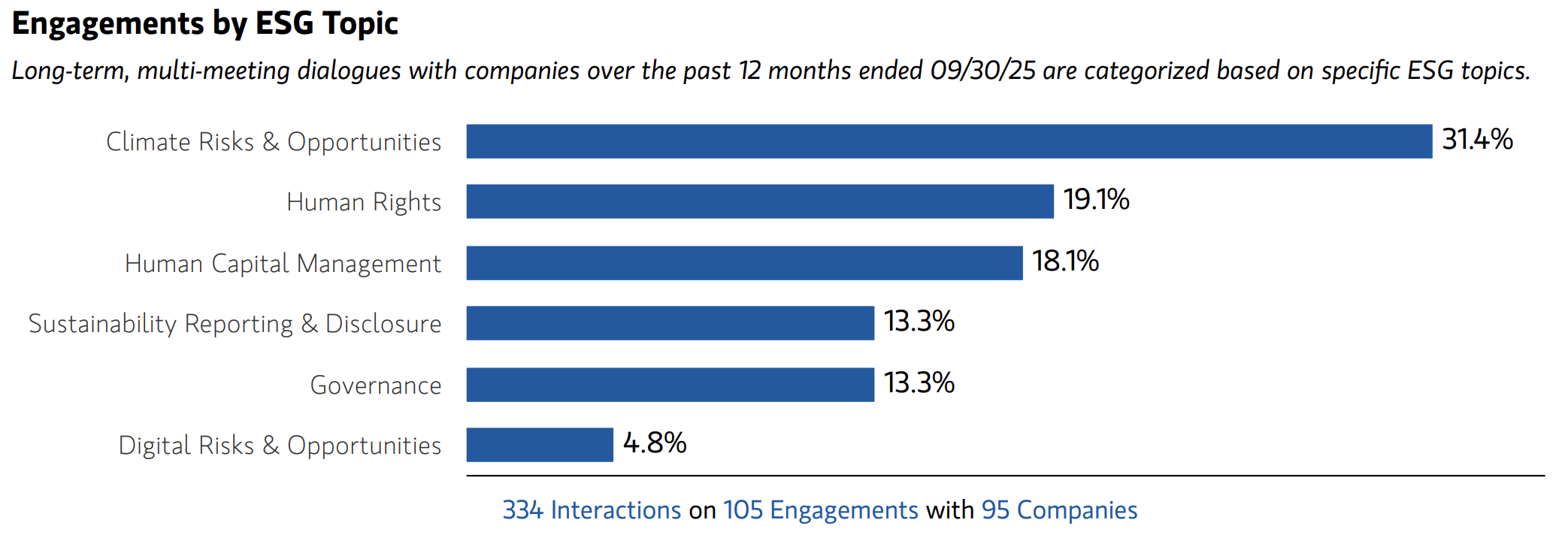
Where Calvert can make a difference is through engagement. Rather than avoiding technology companies outright, they use shareholder resolutions and proxy voting to push companies toward more responsible practices. The goal isn't to stop AI development, instead it's to ensure it doesn't happen without guardrails.
Source: Calvert Sustainability Report
It's worth noting that two of the largest AI companies today, Anthropic and OpenAI, are private, which limits shareholder leverage. But the major hyperscalers like Google and Microsoft, are fair game, and that's where Calvert focuses its engagement efforts.
IPOs and Rockets
2026 is shaping up to be the year of record-breaking IPOs. SpaceX went public today with a market cap of $2 trillion, making it the largest IPO in history. OpenAI and Anthropic are now on deck. The strong market backdrop has created ideal conditions for private companies to finally step into the public market.
I've been asked whether Impact Fiduciary will be buying SpaceX after the IPO. The short answer is not directly. We may end up with a small amount of exposure through certain funds, but nothing that will move the needle materially in any of our portfolios.
Source: CNBC
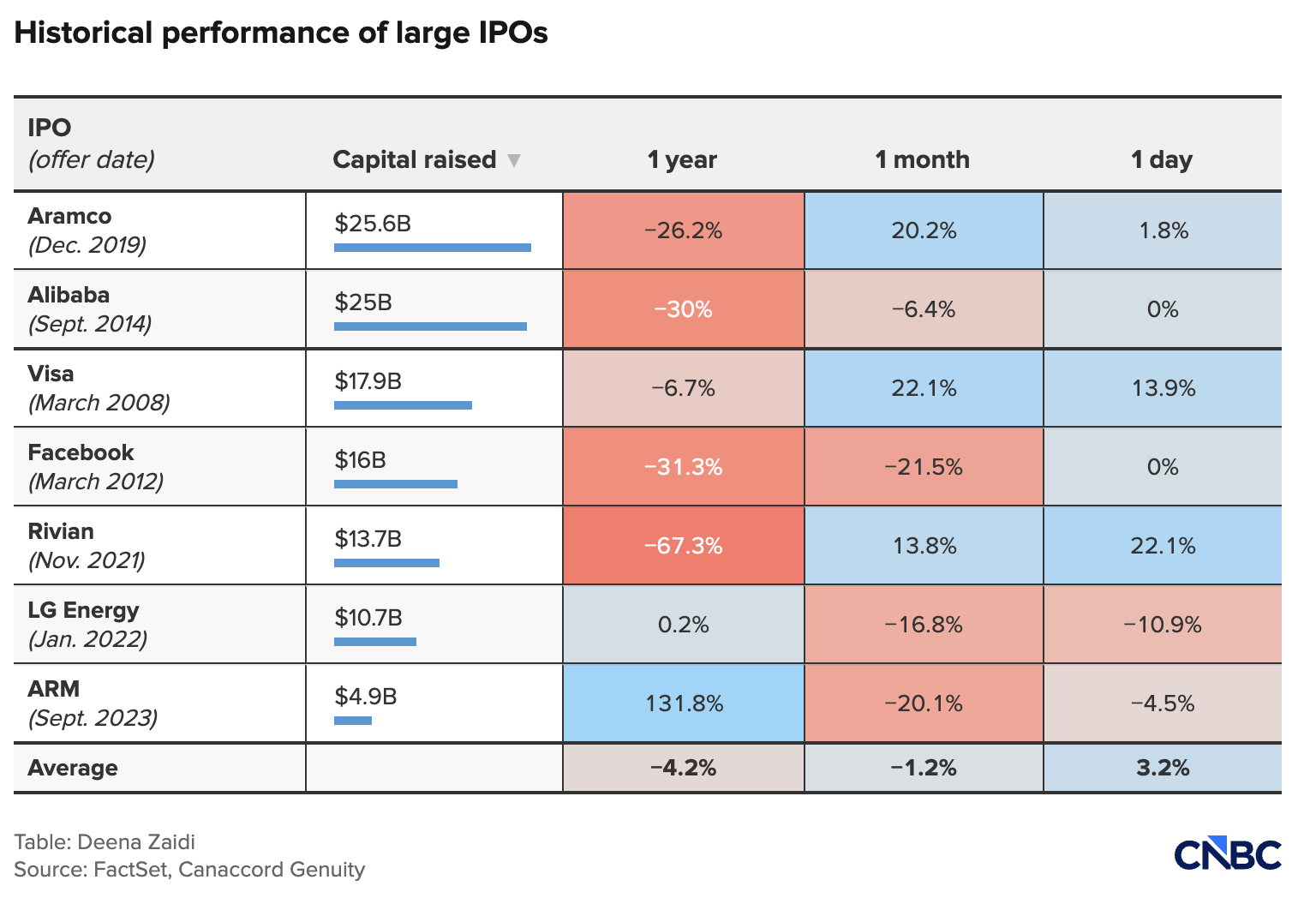
IPOs are exciting as they give founders and employees a chance to monetize years of work. But as investments, they tend to disappoint.
Most IPO stocks lose money in the first year, in part because insiders are eager to reduce their exposure once lockup periods expire. That's not a guarantee the stock goes down, but the historical odds aren't favorable for new investors.
One broader trend is that companies are staying private far longer than they used to, because private capital markets are so much more robust than they were 20 or 30 years ago.
As a result, the total number of publicly traded U.S. stocks has fallen from a peak of roughly 8,000 to around 4,500 today, meaning investors in public markets are seeing less and less of the early growth that now happens while companies are still private.
Amazon went public in 1997 at a total market value of “just” $436 million because at the time, a public listing was essentially the only viable way to raise meaningful capital. Today, Amazon is valued at a staggering $2.5 trillion which represents a whopping 315,000% return. This means that if you invested $1,000 in the IPO you would have $3.1 million today!
A Final Thought
Mark Twain famously said that history never repeats itself, but it often rhymes. The market will likely do what it always does. Surprise us, scare us, and ultimately reward those who stay the course.
At Impact Fiduciary, we're not trying to predict the next correction or the next hot stock. We're focused on building portfolios that can weather the winters ahead while staying positioned for the breakthroughs that may define the decades to come. The jury is still out on a lot of things, but the case for staying invested has never been stronger.
Disclaimer: This article is provided for general information and illustration purposes only. Nothing contained in the material constitutes tax advice, a recommendation for purchase or sale of any security, or investment advisory services. I encourage you to consult a financial planner, accountant, and/or legal counsel for advice specific to your situation. Reproduction of this material is prohibited without written permission from Patrick Dinan, and all rights are reserved.